The CHANI App

Chani App

This may be the first time that I’ve written about an app. I use quite a few of them, but only the free versions, except for the CHANI App.

When the CHANI App for Android users was finally available this summer, I downloaded the free version right away. This app was created by Chani Nicholas, an astrologer that I’ve written about before. I loved her book, You Were Born For This. I look forward to Mondays, so I can listen to her Astrology Of The Week Ahead podcast. Generally, I absorb her content in any way that it’s available.

I really enjoyed using the free app. After hearing about how many users listened to the daily guided meditations, only available with the premium subscription, I decided to do the 14-day free trial. I started listening to the meditations and actually changed my morning routine to incorporate it. Chani has a very soothing voice and the meditations remind me of the ones during a yoga class.

After the free trial ended, I started paying for the premium subscription. I like some of the more detailed information available about my personal chart, but I’ve realized that I don’t use that most days. I’m really paying for the meditations.

Then I started noticing that the app seemed a bit glitchy. I received a couple of crash notifications about it on my phone. Also most days now, when I’m listening to the guided meditation, it will just stop. So I have to restart the app to continue. Sometimes a couple of times. The meditations are about ten minutes, so having to keep stopping during that time is not calming or soothing.

I wondered if these issues were just because of my phone. It’s a few years old and doesn’t have a ton of memory on it. Also the app is new and it may take time to get everything working correctly. But then again, wasn’t all the time that we Android users waited for, so that it would work correctly?

When I looked up the app on Google Play, I noticed that one of the recent reviews mentioned having a similar issue with the meditation stopping and needing a restart. The review was rather harsh and I don’t agree that the app sucks. But I am wondering why I am paying for this app now and whether I should continue.

The information on the free CHANI app is very helpful and maybe that is all that I need. With taxes, I’m paying $12.74 a month. That’s not a ton of money, but it’s more than I’m paying for Netflix, with commercials, where I get a lot more content. Over a year, that adds up to $152.88, which is a fair amount of money.

However, Netflix is a huge corporation. I feel no sense of happiness supporting it. Chani has a smaller woman-owned business that I like supporting. I love that she has a salary floor of $80k for all her employees and offers incredible benefits. And I love that she partners with her wife’s business FreeFrom, where they employ survivors of domestic abuse and put them on a path to building wealth and financial security. I love the work that they are doing. They are changing the American workplace and making such a positive difference.

But I also need to make good financial decisions for myself. I just paid for this month, so I have a month to decide* if I should go back to the free version.

+ + +
*Updated 11/12/23: I ended up downgrading back to the unpaid app.

Screenshot: Google Play
Clothing Rack Assembled!

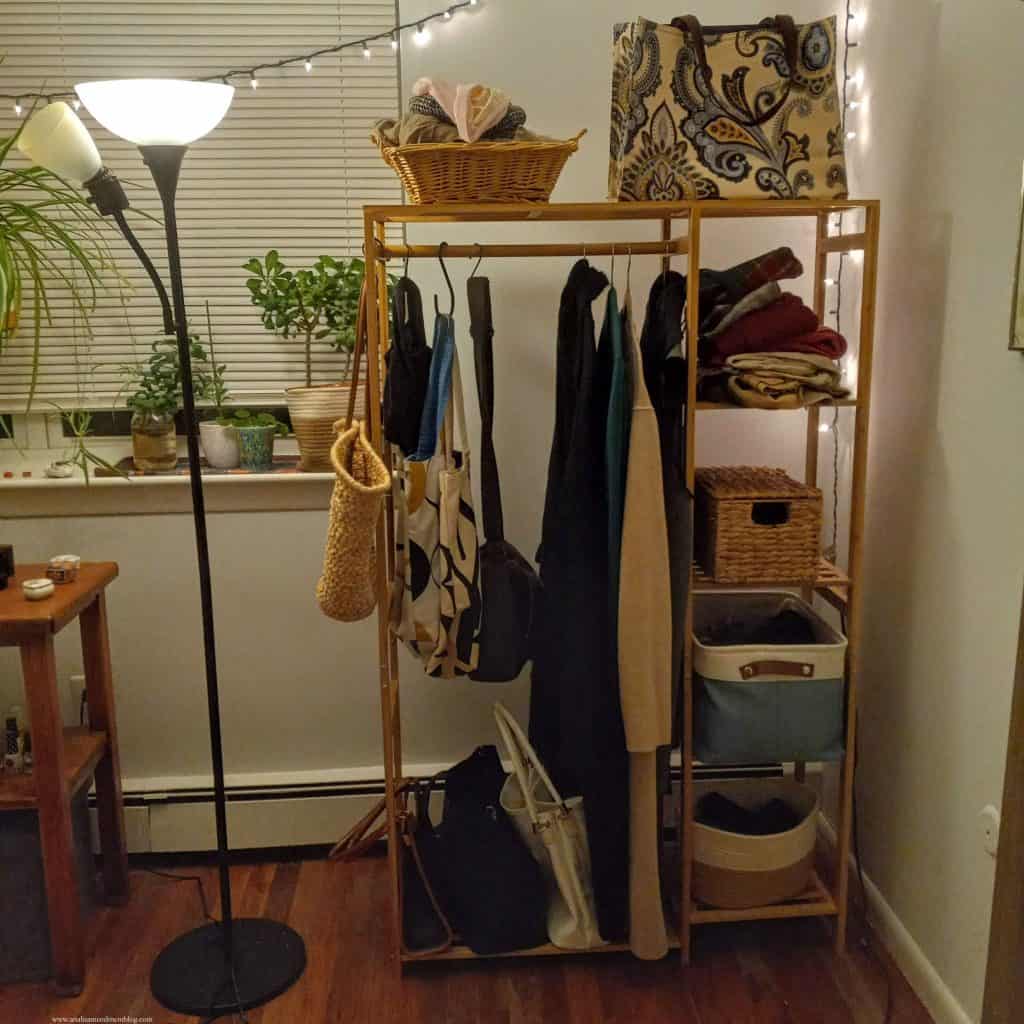
Whew! It’s done. Actually the assembly of this clothing rack didn’t take too long. Somewhere around an hour and a half. Which is quite good compared to the time I’ve spent assembling many other pieces of furniture.

I bought this clothing rack from Wayfair, not sponsored. I’m mostly pleased with it so far and think it looks great. I did notice a piece of wood splitting a tiny bit after vigorously tightening one of the screws. It’s not noticeable and hopefully this will last for a while.

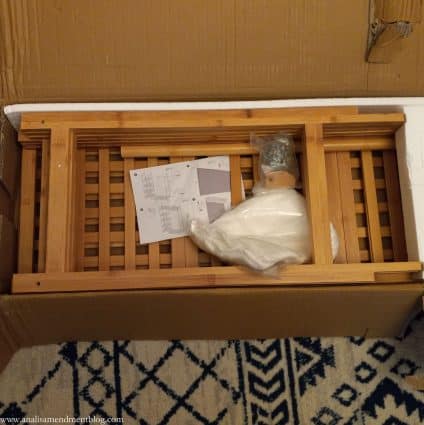
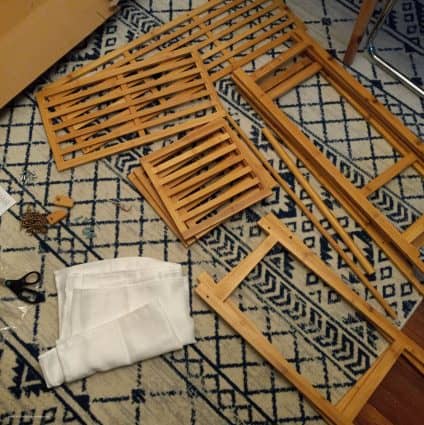
Below are pictures showing how the rack was packaged and then all the pieces that were in the box. The instructions show pictures only, no text giving directions, but are pretty easy to follow.

There were a few pieces left over. There is a white curtain that goes in the back. I didn’t notice it when I first looked at the picture online and ordered it, but now that I look again, I see it. I don’t like the way that it looks, so I didn’t use it.

Another plus, shipping was free and I received delivery earlier than expected.

Lately, I’ve been re-examining how I’m storing things and figuring out what works and what does not. I’ve realized that I need much more closet space. I decided that my long sweaters and other accessories could be stored better. Using this clothing rack, I can see all my scarves and bags easily. And I can figure out what needs replacing or gaps in my wardrobe that I can add to.

This will definitely go through some changes over time, but it’s a start. For now, I just wanted to finish it, so that I could blog it. I haven’t eaten dinner yet and I’m starved, so that’s it for today!

Get Your Seeds for Spring

rose hips seeds

The week after next is March and it will be meteorological spring! For those of us who are cultivating the earth types, we’re planning or at least daydreaming about our gardens. Even if it’s just one or two small containers on a window sill. We’re going to be growing something. So we’re looking for seeds!

The pictures above show seeds harvested from rose hips from my mom’s rose bush. It was fun and seemed like I might be on my way to growing a rose bush of my own. There were a few attempts. Several seedlings grew. Rest in peace dear ones. I’m sorry I couldn’t keep you alive.

I’m not quite sure what went so sadly wrong, but those failures don’t deter me. I know I have a green thumb. Maybe just not with roses. Years ago, I bought a miniature rose bush. It lasted for a few years and is gone now too. Gone, but never forgotten. It was a beauty and I do love roses.

Anyway, a recent timely email from someone included a wonderful resource for finding seeds and supporting Black owned businesses. Perfect for Black History Month and all year round. I’ll be looking for some seeds, but not for roses.

So far, I’m planning to grow: basil, rosemary, green leaf lettuce, green onions, hydrangeas and some wildflowers. We’ll see how it goes. Wish me luck!

Below is a list with links to websites of some seed businesses. Happy planting!

🌱 🌱 🌱

I Grow Shit

Ivy Leaf Farms

Seed Mail

Grow The Block

Melanated Organics

The Hood Garden

Coco and Seed

Sea Us Now & Black Beach Culture

Photo from Sea Us Now

As a Virgo Sun and Taurus Rising, my astrology is deep into the earth. That may explain why I love my plant babies so much!

But some of the best times in my life take place near water. Not long ago, I learned that I’m a Scorpio Moon, which adds some water to my chart. Growing up on the East Coast may have a lot to do with it too. Living in Quincy, Massachusetts, I’m just a couple of miles from the beach. When I open the windows in the summer and the wind blows just right, I can smell the salty air — one of my favorite scents.

There was a pool in the apartment complex where I grew up, so I swam a lot. I loved doing handstands under water and playing Marco Polo. I lounged by the pool almost everyday during the summers and played ping-pong in the cabana. As children, my brother and I took swimming lessons at the local college. Our parents brought us to the beach for picnics and lots of swim time on the Cape. As a young teenager, I even went to marine science camp.

It wasn’t until I was much older that I realized many considered it unusual for African Americans to swim. When you think about movies showing beach culture, often focused on surfing, someone like me usually isn’t there. But things are changing.

On Instagram, I found a group of Black women surfers calling themselves Textured Waves. Their website describes who they are and their goal.

Textured Waves [w]as created to propagate the culture and sport of women[‘]s surfing towards women of color and underrepresented demographics through representation, community and sisterly camaraderie. We value integrity, inclusion and advocating diversity in the water.

In the early summer, Textured Waves premiered a short film called Sea Us Now, which was created in collaboration with Seea, a progressive women’s surf brand. The film itself is extremely short, but the conversation around it is fascinating and worth watching.

It reminded me of the importance of creating something for the future. Documenting that yes, Black women surfers are out there enjoying life right now. Their existence shows a roadmap for the next generation. The conversation alludes to the precarious history of African Americans and water. Our African ancestors were brought to this country in ships. Many suffered horrifying deaths at sea and those who lived witnessed it. There is also a strong history of racial discrimination at public swimming pools in this country. If we look at the water crisis in Flint, Michigan, even our drinking water is harmful. African Americans have ancestral and current trauma involving water that needs healing.

The joy of Sea Us Now starts that aquatic healing. It feels like a daydream. The women of Textured Waves in colorful bathing suits catching the waves. The sound of moving water, peaceful music and driving in a vintage car by the seashore. Carrying their surfboards. Palm trees and ice cream. Short vignettes of style, beauty and warm weather. Flowering trees blowing in the breeze along with their natural hair. Sisterhood. A carefree afternoon. Time for reflection and dreaming. The gift of exercise on the beach. Black health and wellness.

They describe the film as “a re-imagining of our history with the coastline and the sea” and “a love letter to our past and our future.”

If you want to skip right to the film, it starts a little after 25 minutes and goes until almost 30 minutes. But I do hope you watch the conversation.

It’s quite striking that the timing of the film’s release was in the midst of the protests after George Floyd’s death. Watching the video of his murder made me physically hurt. This film is like a balm for the body and soul. In the midst of everything, we can still find happiness and peace. We always have. That’s how we’ve survived.

:: :: ::

Screenshot: YouTube

Fruits & Vegetables: USPS Forever Stamps

At no other time have I been more concerned about the USPS. The Postmaster General is seemingly trying to destroy it from within and the timing is especially harmful. The pandemic isn’t going away any time soon and the most important election of our lives is just weeks away. Reliable mail delivery is paramount.

I certainly can’t save the Postal Service on my own. None of us can individually. But each of us can support it in tiny ways. How? Make a few purchases from the post office.

When you really think about it, it’s so cool that we have a choice of different stamps. They’re colorful and pretty and whimsical. They don’t need to be. A stamp could be quite utilitarian. But we’re provided choices of new ones on a regular basis — practical pieces of art celebrating American culture.

Back in 2014, the Celebrity Chef stamps were a favorite of mine, along with the Farmers Markets stamps. Now, you can purchase USPS Farmers Markets Notecards, which include the stamps. They’re a nice gift for yourself or someone else.

I’ve never bought notecards from the Post Office, but I will in the future. However, I did recently purchase two books of the new Fruits and Vegetables stamps. They’re so pretty!

The stamp designs that we’ve known and loved over the years were created under the direction of USPS art director Derry Noyes. Noyes was interviewed for an article on Artsy, where she explains the process.

It all begins with the Citizen Stamp Advisory Committee (CSAC)—a 12-person panel composed of historians, educators, designers, and others who determine the subjects for each year’s crop of stamps. (Noyes actually served on the committee herself for several years, before transitioning to art direction in the early 1980s.) Their goal, she said, is ‘to pick a broad spectrum that reflects American history, pop culture, people, events—to try to get a good balance for each year.’ …

The stamp-making process typically lasts between two and four years, Noyes said, though it can go on for much longer—particularly if legal issues arise. During this time, the four USPS art directors meet monthly to discuss their ongoing projects and critique one another’s work. Eventually, they share their work with the CSAC to see if they like the direction. The committee eventually votes to approve the final stamp designs, which then must be approved by the postmaster general before they can be released. ‘Unlike a fine artist working for him or herself, doing whatever they feel like, this is a real team effort,’ Noyes said.

While most of us don’t send as much mail as we used to, we still do every once in a while. So buy some stamps that light you up, so the next time you send some snail mail, you’ll spark some joy in the simplest of ways.

+ + +
Photo Credit: USPS