Plants, Plants, Plants!

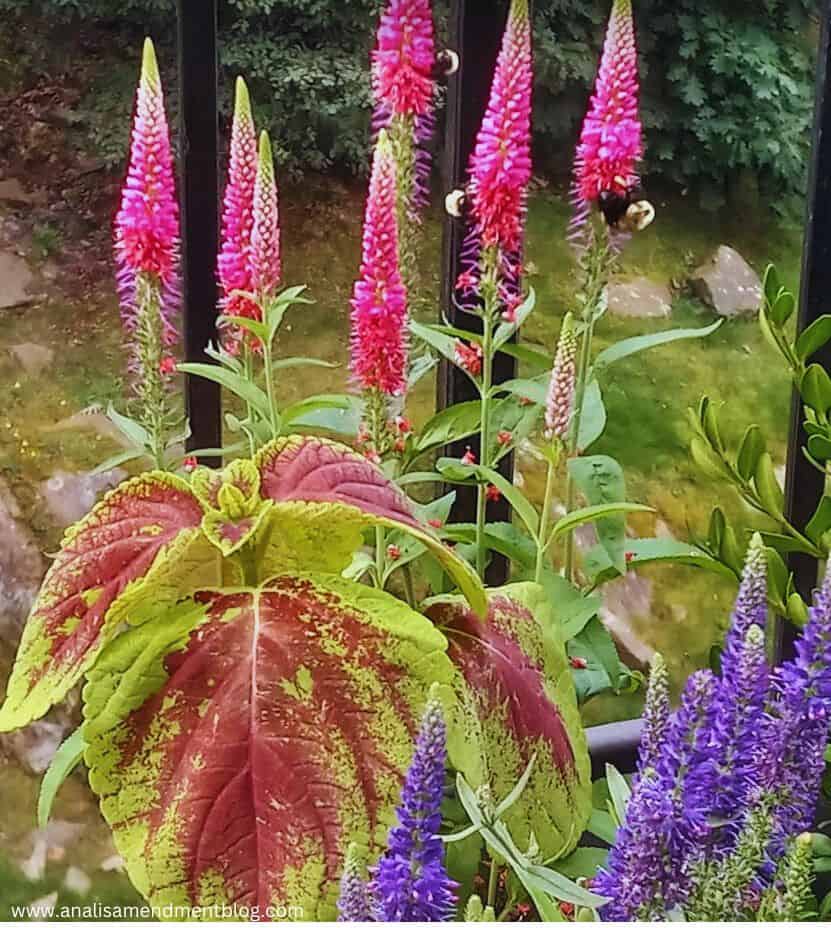
Lupine and coleus plants with bees

Happy September! The summer is flying by and almost gone. But not yet! I’ve enjoyed these precious few warm months and discovered something new. I can sell my plants!

Zoe Pritchard is one of my favorite personal finance vloggers on YouTube. She also talks about her life in Montreal, Canada. She mentioned earning money by selling plant cuttings on Facebook Marketplace. It seemed like a really interesting idea and I wondered if it would work for me.

Like lots of things that I try in life, I don’t necessarily think that it will work, but I’m curious. And my curiosity always gets the best of me. Then I usually decide to experiment. Because I have so many plants, I’m always doing cuttings and propagating them. It’s gotten to a point where I’ve given them away to everyone I know, and new ways were needed to thin the herd.

A few times, I gave some away to strangers by meeting up in a group. But that’s not enough and sometimes people wouldn’t show up as scheduled. I needed a new way to find homes for my plant babies before they took over my home!

Because life is busy, I didn’t get a chance right away to take pictures and do the listings. But then the project that I’ve been working on for almost two years came to a screeching halt. My income suddenly ended and I had more time. So I took some pictures of my precious plants, and listed them on Facebook Marketplace.

Recently, I had also started a very detailed budget. Federal student loan forgiveness gave me a new lease on my financial life. I use a digital budget tracker that I learned about from Zoe’s vlog. It takes a bit of work and discipline, but the detailed nature of it naturally fits my Virgo personality. The tracker aligns with professional work that I’ve done in my career, so I love it and actually find it fun!

I projected that maybe I could make about $30.00 in a month. But in just a little over a month, I’ve made more than $200.00. Not bad! I’ve become a bit more intentional about my plants and what I’m growing. Who knows where this could lead?!

Anyway, I’m loving finding homes for my beloved plant babies and making money in the process. The sweetest of combinations.

If you live in the Quincy area and are interested in buying some plants, take a look at my current offerings and let me know!
Thoughts on Kindness

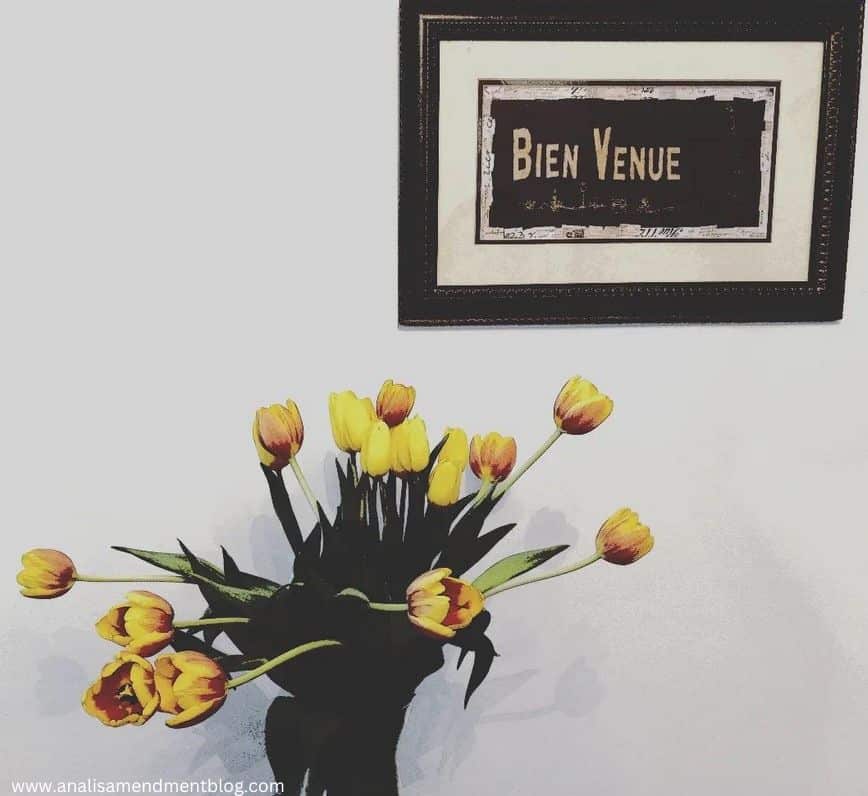
tulips bien venue kindness

Some of my favorite YouTube videos to watch are reaction videos. Specifically, learning about what people think about Americans when they visit the United States for the first time. Overwhelming kindness is what many people experience.

As much as we complain about our country being divided and sometimes feeling that everything is awful, especially after watching the news, there is a lot of good. Video after video after video, I have seen that same reaction. How when people arrive here, Americans are smiling, chatting them up, giving compliments and actually kind of freaking people out. They usually think it’s fake at first, but then after awhile, they realize that it’s just part of American culture. And they like it.

Obviously, Americans aren’t always kind. And some people are so used to being treated badly, they cannot even fathom it. A recent Boston Globe Opinion piece called “The pharmacist and the amaryllis” shook me to the core.

A pharmacist had done a great job helping the writer cut through some red tape and got her insurance company to cover the needed medication. As a thank you, she bought an amaryllis plant to give the pharmacist. But the gift and thank you weren’t received as hoped. The pharmacist couldn’t comprehend the kindness and thought she was in trouble. Below is a portion from the piece.

“Though I was not there, I was the medication recipient and the patient in question. A few weeks later, recovered, I bought an amaryllis plant and brought it to the pharmacy drop-off window. When I asked for the pharmacist by name, the tech looked a little worried. The woman who emerged from the back looked even more worried.

I explained that she had helped to resolve a medical mess a month earlier, that it had required enormous effort, and that I wanted to give her the plant in appreciation. Immediately, her eyes grew a little glazed and fearful.

“I took care of that,” she said quickly. “It won’t happen again.”

“No,” I said, “I’m here to thank you.”

But she couldn’t absorb the thanks. As the public face of insurance noncoverage, delays for prescriptions that were never called in, long waiting lines, unreasonable copayments, and medication side effects that no one explains, she had been trained into a different expectation. It was clear that she was waiting for someone to yell at her.”

After reading this, I thought about the pharmacist. What her days must be like with such constant fear. I hope she can experience a steady stream of kindness. So she can recognize it, when she sees it.

Polar Night in Svalbard

Have you heard of Svalbard? I hadn’t until this past week.

A suggested YouTube video for me with the title, “Life in the DARKEST PLACE on earth (24/7 darkness)︱Svalbard, an island close to the North Pole” caught my eye and I watched.

I had never heard the term “Polar Night” until then either. I’ve heard of places where it’s dark 24/7 for periods of time during the winter, but this term seemed to encapsulate something different the way the vlogger, Cecilia, describes it. Polar Night in Svalbard lasts for two months!

The tourism website for Svalbard describes it in a rather fun way too.

‘Winter doesn’t just show up overnight’ is something you’d be safe enough to say most other places in the world without being wrong. But what if the night doesn’t just last a couple of hours, but instead spans over two months? The dark season in Svalbard lasts from around the end of October until the middle of February, but between November 14th and January 29th we enter the darkest and cosiest part of the dark season, also known as the Polar Night. As the days darken during late autumn the cold of winter also creeps in, and with the coming of the sun the light also shines on a new winter in our archipelago. While winter may not show up overnight, a lot can happen during the course of a Polar Night!

Cecilia loves this season and really leans into it. She’s all about the hot drinks with sweets, lighting fires and plaid flannel pajamas. Full on cozy! Which I love, and reminds me of when I started writing my Collection Of Moments series. Where I could find the good in all the seasons, not just the warm ones that I prefer.

I learned about hygge, which is a Danish term, where they also lean into the coziness of the dark winter months. Svalbard is one of a cluster of islands that are part of Norway, but very west of the country and closer to the North Pole.

One of the wildest things that she talks about is the polar bears. There are many around and they are a real threat. In one of the videos when she went for a walk, not only does she have a hat with a spotlight, she slung a rifle over her back. I’m not a gun person, but I can definitely see the need for one. This is no joke and one of the many tools for survival.

So I’m enjoying the videos and will watch more. But I don’t think that I would visit. Especially not during Polar Night. We’re in the darkest month right now here in Massachusetts. It will keep getting darker until the Winter Solstice on December 21st. Getting dark at 4pm is bad enough. Never mind complete darkness for two months!

I don’t want to wish time away, so I’m leaning into the cozy as well. The light will return soon enough. And at least we don’t have to worry about polar bears!

+ + +
Image: Screenshot

SKUBB Storage Solutions

SKUBB under bed storage

When I look back at what I did this month, one of the biggest themes will be organizing. I got rid of a lot of old storage items that no longer worked well for me. Then found new ways to organize. From adding a clothing rack with shelves, to adding bins and other containers to my fridge.

For the longest time, I’d been storing my off-season clothing in a very large suitcase that I had stopped using. The way that I stored it in my last apartment, the suitcase was out of the way and I hardly ever had to deal with it.

Where I live now, it was in the way everyday and constantly annoying me. Then I realized that the wheels of the suitcase were literally disintegrating, leaving trails of black plastic whenever I moved it. That was the final straw. Time for a change!

I needed to figure out a different way to store these items, but wasn’t sure what I needed. Within a couple of weeks of realizing this, I saw a YouTube video showing under bed storage using SKUBB storage cases from IKEA. I ordered two of them right away. What a joy to throw away that old suitcase!

Storing off-season clothing is so easy now. With all the changes I’ve made recently, I’ve actually freed up a lot of space. This makes my Virgo brain very happy!

American Tipping Culture

tipping culture

Some of the most interesting videos that I’ve seen on YouTube are the ones talking about American culture. The reactions from people who aren’t American, when they learn about our tipping culture in restaurants is quite interesting.

Often it’s hard to see what is American culture, until we step out of it through travel or have it reflected back to us by someone who is not part of the culture. Many cultural practices we don’t think of as such, because they are so obvious and mundane. Like American breakfast culture.

I never thought of it as a thing until someone mentioned to me that Americans are the only ones who have specific breakfast foods. People in other countries will often eat any type of food for breakfast. For instance, I would never think of eating soup for breakfast. Or a salad. Weekend brunch is a different thing, because anything goes there.

But on a random Wednesday morning, I wouldn’t be eating chicken and rice with vegetables. To me that is clearly lunch or dinner food. Breakfast is hot or cold cereal, fruit, coffee, toast, eggs, pancakes, etc. But now I see that’s American breakfast. The more I think about culture, it seems that it’s those things you do, clothes you wear, music you listen to, words you use, and foods you cook, just because. That unspoken “just because” is culture.

There are reasons for it, but it takes some historical and sociological digging to figure out how that custom or practice developed over time. Like how Italian American food was created and is something very different from Italian food in Italy.

There is a long history of how tipping culture developed in the United States, which I won’t go into. But tipping is a very American thing and people from other countries tend to be shocked by it. Most Americans do expect to tip at a restaurant. But more recently Americans are becoming shocked that tipping keeps expanding to include everything.

One thing that surprises me is the amounts that people think are okay for tipping. I was brought up to believe that 20% is the minimum tip at a restaurant. If it’s bad in some way, then it’s okay to give less. But if it’s very good, then give more. As much as you can.

When my father was in college, he worked as a waiter, I think at a place on Beacon Hill, to pay for his expenses and to help his family. So tipping was very important to him personally. From when I was a kid, when we went out to eat, he always made a point of thanking everyone who waited on us and giving the tip personally. Shook their hand, looked them in the eye. He never just left it on the table.

I always thought that most everyone believed the same things, until I started reading comments where people thought that a 15% tip was okay, good even. That was and is still so shocking to me!

It took me until recently to realize that my family had a particular tipping culture. When going out in a group, often we don’t know what other people leave for a tip. Even if we do, we tend to not know their personal experience growing up with tipping and I don’t think that most people talk about it. Or do they? What do you think?