Do You Watch Eclipses?

eclipses

Since I was young, I’ve been fascinated by eclipses. If anything can make you feel the mystery and wonder of life, it’s an eclipse. Also, my family, going back generations, has a history with them.

Eclipses are literally dangerous. Looking into one without proper protection can damage our eyes and even cause blindness. Although they are a natural wonder, maybe they’re also a sight that we shouldn’t behold. And that’s not just because we want to protect our eyes.

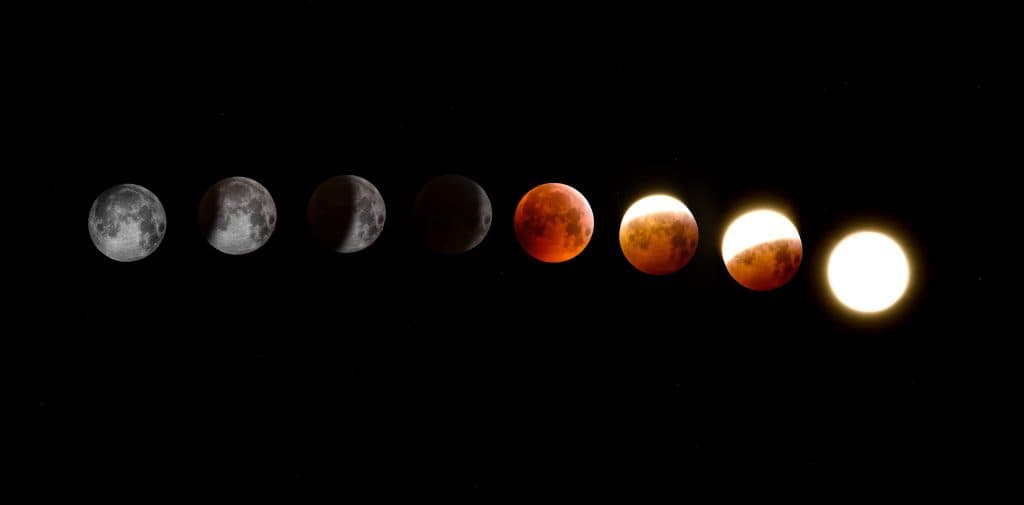
Even though eclipses seem rare, they happen every year and even have seasons. We’re heading into eclipse season tomorrow, which will be the first in the set, and a solar eclipse. Eclipses happen with new moons and full moons. So one eclipse follows the other. The second eclipse in this set will be with the full moon on October 28th, and a lunar eclipse.

On Chani Nicholas’s weekly astrology podcast, she dives deep into eclipse season. I’ve heard her take on eclipses elsewhere and find it quite striking. She doesn’t think it’s bad or good to look at them, but she prefers not to watch them and just lets them do their thing.

She discusses how eclipses are caused by the light being blocked from our luminaries, the sun and moon, which causes shadows. Basically the connection to our power source or energy is being interfered with and becomes unstable, so there are energy surges. Generally, when we think of things in shadow and power outages, that might not be something we want to invite into our lives. There is a lack of clarity and unpredictability. Things may not be as they seem and maybe we need to wait it out. Also we may feel drained of our energy. So if we’re feeling tired tomorrow, it’s to be expected.

Also, she says that eclipses are about the speeding up of endings and beginnings. The one tomorrow is about release and letting things go. This makes a lot of sense to me. As I mentioned in a post back in August, my federal student loans were forgiven. Which was wonderful, I didn’t have to make payments. However, they were still showing up on my credit report, so it didn’t truly feel like they were gone. The weight of them wasn’t completely gone. Today, they finally disappeared from my credit report! I can fully let them go energetically. They are really gone. Maybe the upcoming eclipse helped sweep them away.

Anyway, if you’re looking for a safer alternative to following tomorrow’s eclipse, NASA has you covered with their new 2023 Eclipse Explorer: Your Interactive Guide to the 2023 Annular Solar Eclipse.

Needless to say, NASA will be busy tomorrow. Did you hear that NASA plans to fire rockets directly into the eclipse’s shadow? Kind of wild. The article on the NASA website explains more.

“The mission, known as Atmospheric Perturbations around the Eclipse Path or APEP, is led by Aroh Barjatya, a professor of engineering physics at Embry-Riddle Aeronautical University in Daytona Beach, Florida, where he directs the Space and Atmospheric Instrumentation Lab.

Some 50 miles up and beyond, the air itself becomes electric. Scientists call this atmospheric layer the ionosphere because it is where the UV component of sunlight can pry electrons away from atoms to form a sea of high-flying ions and electrons. The Sun’s constant energy keeps these mutually attracted particles separated throughout the day. But as the Sun dips below the horizon, many recombine into neutral atoms for the night, only to part ways again at sunrise.

During a solar eclipse, the sunlight vanishes and reappears over a small part of the landscape almost at once. In a flash, ionospheric temperature and density drop, then rise again, sending waves rippling through the ionosphere. …

The APEP team plans to launch three rockets in succession – one about 35 minutes before local peak eclipse, one during peak eclipse, and one 35 minutes after. They will fly just outside the path of annularity, where the Moon passes directly in front of the Sun. Each rocket will deploy four small scientific instruments that will measure changes in electric and magnetic fields, density, and temperature. If they are successful, these will be the first simultaneous measurements taken from multiple locations in the ionosphere during a solar eclipse.”

It will be fascinating to learn their findings and see the changes that this eclipse season brings.

December 14th 2020

December 14th 2020

Today, December 14th 2020, is a day that needs to be marked for history’s sake. And there was even a total solar eclipse that added to the drama of it all.

Election News

The Electoral College voted to certify the wins of Joe Biden and Kamala Harris to be the next president and vice-president of the United States. Because the current president refuses to concede that he lost the election, this vote feels like the win is cemented. Dozens of court challenges be damned.

Pandemic News

The coronavirus vaccine is finally here! Today, the first doses were administered in the United States and the vaccination effort is happening all over the world. The vaccine is being given to healthcare workers, the elderly and other vulnerable groups first. Since I’m not over 65 and have no underlying health issues, I most likely won’t be able to get it until March or April. But I will be getting it.

December 14th 2020, is a day that I want to remember and one that will no doubt be in future history books.

:: :: ::

Image: YouTube

Boston Total Solar Eclipse History From 1932

Total eclipse of the sun August, 31, 1932.

Are you excited about the total solar eclipse today? I am! Unfortunately I don’t have glasses, but I’m hoping to enjoy the event anyway.

Also, today I learned that my family has eclipse history. Who knew?

My aunt found a clipping from her aunt’s scrapbook with a portion of a poem called “The Total Eclipse Of The Sun Of Two Centuries Ago.”

I found the full poem online called, “On The Eclipse Of The Sun, April 1715.” It was written by Allan Ramsay, who was born in Scotland in 1686 and died in 1758. With a quick search, I found that the eclipse was on April 22, 1715.

However, with some further digging it seems that because of changes with the calendar that the date of this total solar eclipse, called Halley’s Eclipse, may have actually been on May 3, 1715. Below is portion of the article from The Guardian.

[A] total solar eclipse was visible across a broad band of England. It was the first to be predicted on the basis of the Newtonian theory of universal gravitation, its path mapped clearly and advertised widely in advance. Visible in locations such as London and Cambridge, both astronomical experts and the public were able to see the phenomena and be impressed by the predictive power of the new astronomy.

So this 1715 eclipse was special. It was predicted based on recent scientific developments and the public was ready and waiting to see the spectacular sight. Ramsay, who was about 29 years old at the time, must have been deeply moved by the eclipse, because his poem is quite epic.

Below is a portion, edited for length. See the full poem here.

Now do I press among the learned throng,
To tell a great eclipse in little song.
At me nor scheme nor demonstration ask,
That is our Gregory’s or fam’d Halley’s task;
‘Tis they who are conversant with each star,
We know how planets planets’ rays debar;

When night’s pale queen, in her oft changed way,
Will intercept in direct line his ray,
And make black night usurp the throne of day.
The curious will attend that hour with care,
And wish no clouds may hover in the air,
To dark the medium, and obstruct from sight
The gradual motion and decay of light;
Whilst thoughtless fools will view the water-pail,
To see which of the planets will prevail;
For then they think the sun and moon make war,
Thus nurses’ tales oft-times the judgment mar.
When this strange darkness overshades the plains …

What’s especially fascinating about the clipping of this poem, besides the coffee stains, is that my great aunt wrote on it. She wrote that on August 31,1932, she and two of her sisters stood together on Tremont Street in downtown Boston at St. Paul’s Cathedral across from the Park Street T station to view the eclipse.

I’m assuming that they had glasses, because none of them lost their vision from what I know. This story is new to me and gives me some insight into my great aunts’ lives that I didn’t have before. They were really into the eclipse!

Also, my mother pointed out that the names mentioned did not include my grandmother. So now I wonder. Where was my grandmother? And why wasn’t she with her sisters?

As someone who is very much into the idea of time travel, this also makes me think about how I have an approximate time, date and place to go back to to meet some family members!

An article from Science Magazine says that the 1932 total solar eclipse was a path about 100 miles wide that included New England, so they had the real deal, unlike what we will have here in New England later today.

The picture above is from a short video that I found showing the preparation for and actual video from the 1932 eclipse. Today will be full of wonder and no doubt will be history for those looking back at this someday.

Hope you have a wonderful day and Happy Solar Eclipse!

+ + +
Screenshot: YouTube